
* I am not a doctor. This is purely what I have found from research & personal experience. Please consult your doctor before making any giant lifestyle changes
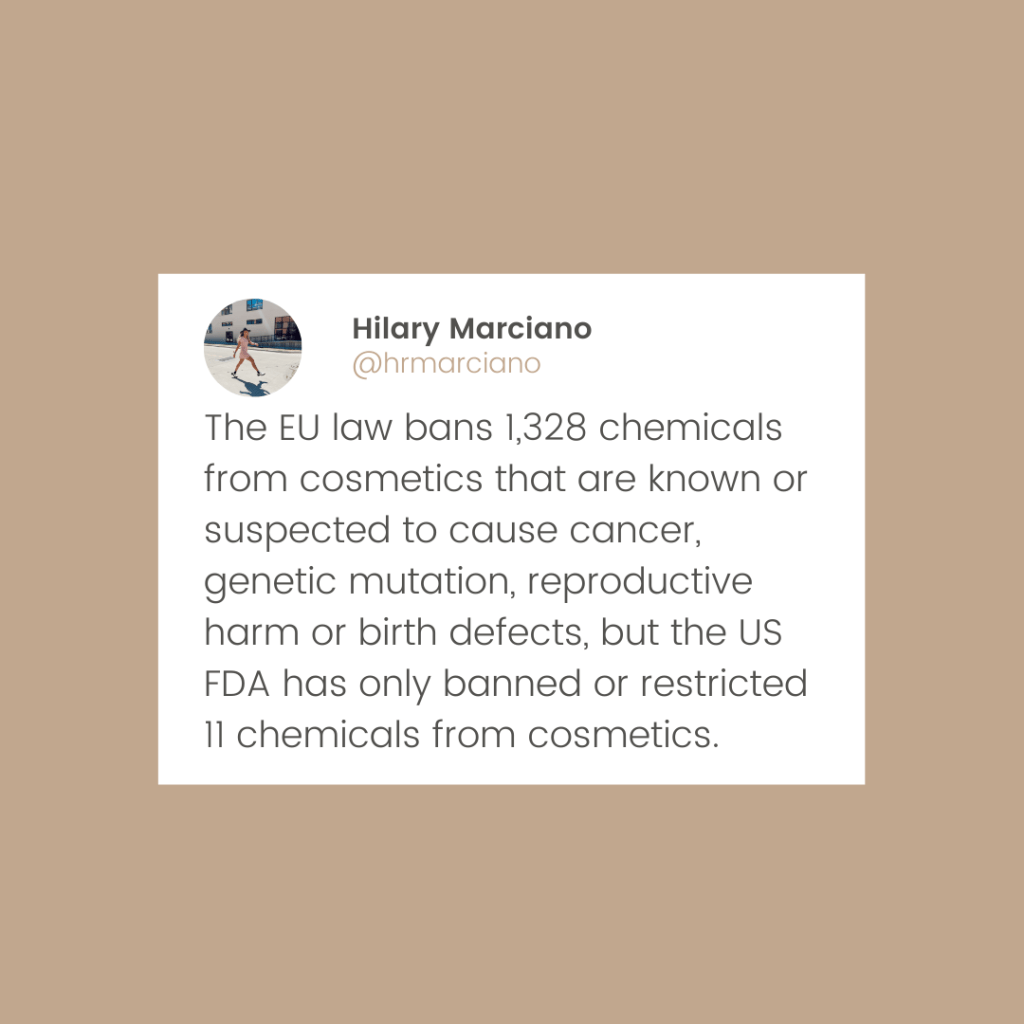
Did you know that the EU law bans 1,328 chemicals from cosmetics that are known or suspected to cause cancer, genetic mutation, reproductive harm or birth defects? But the US FDA has only banned or restricted 11 chemicals from cosmetics?
& that since 2009, 595 cosmetics manufacturers have reported using 88 chemicals, in more than 73,000 products, that have been linked to cancer, birth defects or reproductive harm.
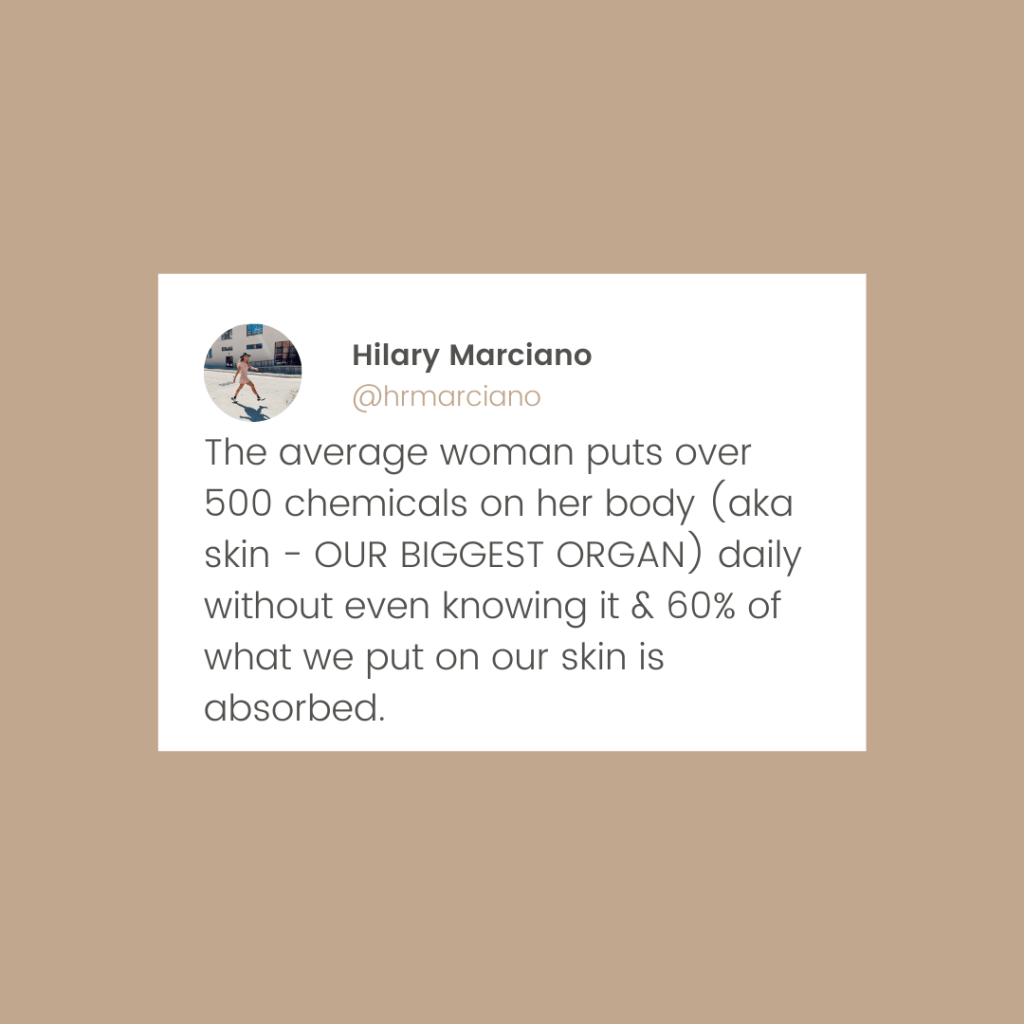
Last mind blowing fact: The average woman puts over 500 chemicals on her body (aka skin OUR BIGGEST ORGAN) daily without even knowing it && 60% of what we put on our skin is absorbed.
What are endocrine disruptors?
Many chemicals, both natural and man made, may mimic or interfere with the body’s hormones, known as the endocrine system. They are found in many everyday products, including some plastic products, liners of metal food cans, detergents, candles, flame retardants, food, toys, cosmetics, pesticides & more.
What are the most common endocrine disruptors?
- Bisphenol A (BPA): used to make polycarbonate plastics and epoxy resins, which are found in many plastic products including food storage containers
- Dioxins: produced as a byproduct in herbicide productions and paper bleaching; tampons & feminine products
- Perchlorate: a by-product of aerospace, weapon and pharmaceutical industries found in drinking water
- Perfluoroalkyl: used widely in industrial applications, non-stick pans, paper and more
- Phthalates: used to make plastics more flexible, they are also found in some food packaging, cosmetics, hair products, children’s toys, and medical devices, and anything with “fragrance” in it
- Aluminum: often found in deodorants
- Parabens: found in many body care and hair care products
- Phytoestrogens: naturally occurring substances in plants that have hormone-link activity, such as Feinstein and daidzein that are in soy products (like tofu or soy milk)
- Polybrominated diphenyl ethers (PBDE): used to make flame retardants for household products such as furniture foam and carpets
- Triclosan: may be found in some microbial and personal care products, like liquid body wash and deodorants
What should we be ditching? Things you may use often that could have endocrine disruptors in them:
- Deodorants
- Body washes
- Body lotions
- Shampoo & conditioner
- Candles & fragrances
- Tampons
- Lubes
- Plastic containers and bottles
- Teflon pans
- Furniture
- Sugary food products
- Artificial coloring and sweeteners
- Inflammatory vegetable/seed oils
- Meats & dairy that aren’t hormone/steroid free
- High fructose corn syrup
- GMOs
Want to learn more about how to choose cleaner options? Stay tuned for a blog post coming or follow along over on IG (@hrmarciano).
XOXO,
Hil
 hrmarciano